We featured it in issue #96, “Why do you read all that weird shit?” Lennon is currently serving a prison sentence for murder, and at the time of the book’s publication was in the twenty-fourth year of that sentence.
Raised in Sheepshead Bay, Brooklyn by a single mom after stints in juvenile detention, drug dealing, and gang life, Lennon murdered a former friend and street acquaintance over a drug beef, and was shipped to Rikers Island to await trial and never left. He has since served in nearly every federal prison in New York state, including Dannemora and Attica, and in fact, it was in Attica where he was enrolled in a creative writing class.
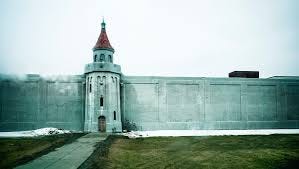
Attica Prison (image via Esquire.com).
That creative writing class changed Lennon’s life, as writing classes are wont to do. Writing allowed him to identify a skill and a passion, and helped to channel his many conflicted emotions. After years of drug addiction and violence, he was able to begin his recovery and channel his energies elsewhere.
In the years since he began writing, Lennon has had an editorial career that’s the envy of nearly every writer. He’s been published in the Atlantic (his debut was published here!), TheNew Yorker, The New York Times, he’s a regular contributor to The New York Review of Books, and Esquire, where he is a contributing editor.
His book is a blended memoir of his own life story and that of three other men incarcerated for very violent murders, including Robert Chambers, who became infamous in the late 80s-early 90s as the “Preppie Killer” for strangling Jennifer Levin in Central Park.
Thanks for reading The RONA READer! Subscribe for free to receive new posts and support my work.
As it is so often, when scratching just under the surface of violent criminals, little of their lives is straightforward. There’s poverty, mental illness, and extensive child physical and sexual abuse. There’s also race; Lennon is white, as are two of the three men he profiles, though that hasn’t factored into his narrative yet as much as I thought it would. All four men required the forced routine and semi-solitude of prison to begin reflecting and taking responsibility for their actions.
Many of Lennon’s first published essays were about his life and the murder that sent him to prison. After one of these essays was published in The Washington Post, his victim’s sister wrote a letter to the editor where she expressed doubt at Lennon’s stated remorse and requested that he stop using her brother’s name in his writing (which he has since honored).
Reading Lennon’s book has me reflecting a lot on where we learn to write and what our first subjects are. What’s even more ironic or perhaps serendipitous is that this week, one of my former MFA writing instructors, James Lasdun, published a new book this week on the Murdaugh murders, which he covered for The New Yorker. His article covering the crime was the magazine’s most-read story that year.
Not only do I find the Murdaugh murders fascinating, but Lasdun is one of the people I credit with teaching me to write.
Alexander Murdaugh was a distinguished lawyer in the Lowcountry of South Carolina, a member of a powerful legal family, frequently referred to as a “dynasty,” whose castle began to crumble in 2019, when his teenage son, Paul, drunkenly crashed the family’s boat, killing one of his young female passengers. Within two years, both Paul and his mother, Maggie, were shot to death on the family’s estate, as it was revealed that Alex had been embezzling money to feed increasing debts and his addiction to painkillers. He was convicted of the murder of his wife and son in 2023 and is currently serving a life sentence.
Moselle, the Murdaugh’s property in South Carolina, where the murders were committed (image via JPKing.com)
The story has such incredible layers to it. The Lowcountry is an insulated, Southern world, the culture and hierarchy of which is difficult to comprehend if you didn’t grow up there. It’s a place where who your family is matters in astounding ways, where you can point to direct relatives in old photos going back a hundred years, instilling you with the kind of power that makes you rich and seemingly untouchable. The Murdaugh family dynamics are no less twisted, and have spawned a podcast, a drama series, two hit documentaries, several books, Lasdun’s now among them.
And it’s no wonder that Lasdun felt drawn to this story. It was in his class that we read novels like ANNA KARENINA and THE TALENTED MR. RIPLEY, stories of people doing wrong for deeply fascinating reasons. Lasdun built his writing career on writing Ripley-esque crime novels and a memoir of the time he was stalked by a student (when I was at The New School, he didn’t take on thesis students for this reason).
Lasdun’s class was simple. He assigned a book, and often we would sit in class, reading these books line by line, while he stopped and pointed out certain words, phrases, or historical bits, inspiring conversation and debate.
We read the famous Levin-cuts-the-wheat scene in KARENINA this way, and it was the kind of class experience they write sappy movies like Dead Poets about. I’d been a reader (and a writer) my whole life, but suddenly, Lasdun was pointing out details about Tolstoy’s decision-making when it came to pacing, word meaning, etc., that, despite being so simple in theory, opened my eyes to an entirely new way to read.
There’s a lot of debate over whether you “need” to get an MFA in creative writing, and of course, you never need to go to art school. But when I’m asked what the best part was of getting my MFA, aside from the community, the opportunity, and all, is how it taught me to read.
I went on to have additional reading experiences like this in my second year of grad school, but that breakdown of a novel and how a writer writes happened in Lasdun’s class.
For me, it’s mostly true that you learn to write just by doing. I started writing as a kid, and my parents encouraged my writing. It became something I was known for amongst my friends and peers. During my workshop yesterday, Kristen Arnett impressed upon us how important it is to read your work in progress aloud to other people, and several of my workshop peers bemoaned how they don’t have anyone to read to. I instantly recalled how I used to bribe the neighborhood children on my cul-de-sac growing up to listen to something that I had written (sorry Elizabeth and Corey, you patiently listened even when you told me you really didn’t want to).
But I’m not sure I started formally learning until I began performing and workshopping my writing in New York City, when I was in my early 20s. I had a certain amount of natural talent (I like to think I do anyway), but I started learning things in those first workshops (Lost Lit with Lynne Conner! Still going!) that changed how I write forever.
I was going through a phase in my writing where I didn’t want to name my characters or the location of the story, based on some fuzzy idea of letting the reader “see themselves” in my protagonists and imagine it took place “anywhere and everywhere.” Lynne gently pointed out that small grounding bits like character names and story place are small, but become much larger in a reader’s mind when they aren’t identified. You can orient the reader, gain their trust, and ground your story instantly by writing a simple sentence like, “John took the MetroNorth up the Hudson on Thursday.”
Simple advice that instantly changed how I work. Why withhold info from the reader that can grow and create these disorienting plot holes? This exact question came up in our workshop last night, when a fellow writer brilliantly solved one of their story problems with a two-sentence solution.
Lynne, you were the first to teach me that!
Since getting my MFA and attending the gajillion of workshops I have since that first one at Lost Lit, I’ve often heard writers say, if anyone tells you how to write, ignore them. But I beg to differ.
I think what folks mean when they give that advice is, you’re the writer who has ultimate control of your art. No one knows your work better than you, and at the end of the day, you take what criticism works for you and throw away the rest. Every artist has that terrible lived experience of getting hurtful or overreaching feedback from a respected mentor, the kind of feedback that stalls your creativity or your production and makes you feel doubt about your work and/or your skills.
Yet in my experience, one of the great benefits of workshopping and being in an MFA program is how you learn to identify those types of critique and grow thicker skin. And you also learn just how much good shit other writers can teach you about how to write.
Imagine if John J. Lennon went to that writing workshop in Attica and didn’t get any direction from the instructor. Would he be a published author today? Would he be mentoring other incarcerated writers?
Imagine if I went into James Lasdun’s class and decided to ignore everything he pointed out to me about Tolstoy’s writing because I thought it was unapplicable to my work?
If you’re ever in a room where your art is the best, you’re probably in the wrong room. My uncle always told my dad, never play baseball with the kids at your skill level, play with the older kids who are better than you if you want to improve. Art is like baseball in that way.
Thanks for reading The RONA READer! Subscribe for free to play ball with the big kids.
There are only a few Toni Morrisons and Virginia Woolfes in the world who can write the way they do without the help of workshops and stuff. Although, as I write this, both of these writers were editors and part of publishing houses, and probably got lots of feedback, so maybe those are bad examples. Basically, there are very few writers who don’t need to be taught anything. Most writers aren’t going to teach Toni Morrison shit. But somewhere she still learned, from someone, and somehow.
Sometimes that’s in a prison workshop in Attica. Sometimes that’s in a tiny, hospital white classroom on the second floor of the New School building. How we read is how we write and so much more.
This week’s shelf features a few books from the folks who taught me something.
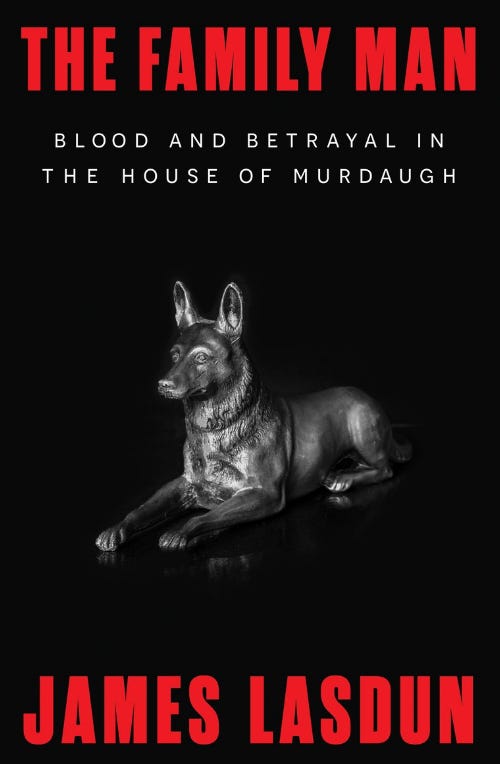
“Justice may have been served,” Lasdun writes in the preface to The Family Man, “but the human element of the story didn’t seem to add up.”
Having traveled extensively in the Lowcountry, Lasdun draws on original interviews (including with Murdaugh’s notorious “Cousin Eddie”), transcripts of phone calls Murdaugh made from prison, the literature of criminal psychology, and the murder trial itself. Deeply researched, sharply written, and with the page-turning intensity of a Southern gothic novel, The Family Man constructs a masterful portrait of Murdaugh and the mind-boggling crimes that wreaked havoc on his community.
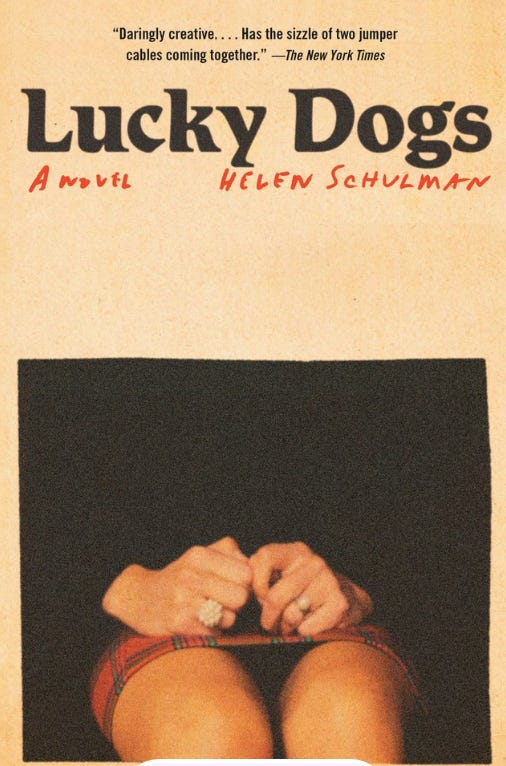
Schulman was the director of the fiction cohort of my MFA program, and when I took her workshop, she uttered the indelible words, “It sounds good, but what does it mean?”
Her last novel follows two women in Paris from very different backgrounds, one with a mysterious past, another a troubled TV star, who are forced together after a violent street altercation that brings up their individual pasts of sexual abuse. Schulman explores how female relationships can empower and injure when influenced by misogyny and survival.
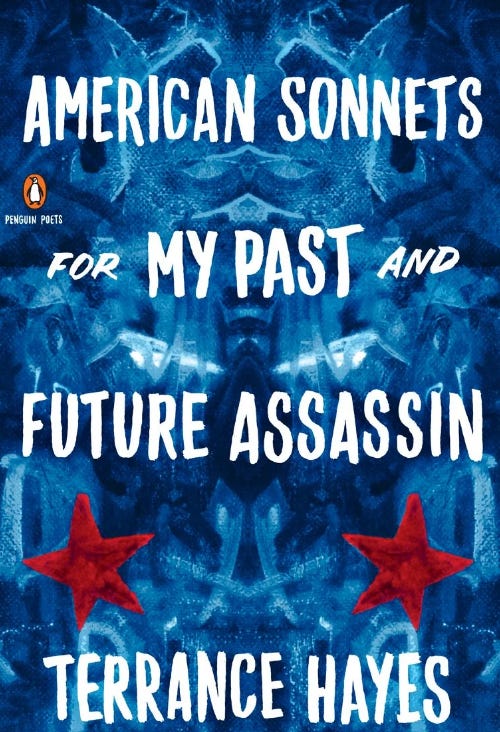
American Sonnets for My Past and Future Assassin by Terrance Hayes
Hayes debuted this collection at The New School while I was working in events, and I had a literal front row seat to this work about race, politics, and history, which The Atlantic named one of the best poetry books of the 21st Century. It has continued resonance on the 250th birthday of the United States.
Hayes work in THE NEW YORKER
…Get real about supporting teachers
Speaking of teachers and learning, we’re in an election year, folks! State and local elections are where the real change happens. So often, Presidential elections suck up all the attention and air in the room, and sure, it’s an important election.
But long-term change in your community and the funding for overseas wars is driven by state and local representatives who are currently being primaried and will be elected in November.
If you, like me, just got your primary ballot in the mail and for every name you recognize, there are a dozen you don’t, you need to take an hour and do the research into whose been endorsed by organizations you trust and see who has platforms and ideas that you support.
The Legal Defense Fund has an online voting guide that you can use to look up candidates in your area. A great resource, especially when newspaper guides are often behind a paywall. Happy voting!





![POEM] American Sonnet for My Past and Future Assassin by ...](https://substackcdn.com/image/fetch/$s_!7ApI!,f_auto,q_auto:good,fl_progressive:steep/https%3A%2F%2Fsubstack-post-media.s3.amazonaws.com%2Fpublic%2Fimages%2Ff64de39f-111b-42d2-96c9-7b420251f0a5_1080x796.jpeg "POEM] American Sonnet for My Past and Future Assassin by ...")

Very interesting read!